
12 July 2026
Residential Construction Project Manager: Build Right
See how a residential construction project manager drives custom home builds—from eight stages to procurement—and what to ask before you hire.
A residential construction project manager is the single point of accountability for your home build. They organize design decisions, permits/approvals, procurement, schedules, trades, and quality checks so the finished home aligns with your brief, your site, and agreed standards—start to finish.
By King Style Homes • Last updated: July 12, 2026
Overview
A residential construction project manager converts your vision into a buildable plan, then protects schedule and finish quality. They integrate design, permits, procurement, and site coordination, while issuing structured reports so you always know progress, decisions needed, and what happens next.
We meet many owners who fear long silences during construction. That’s real stress. Our project managers set a firm update cadence, share photo reports, and flag decisions early. If a storm forces resequencing, you’ll hear the plan the same day, not weeks later.
- Use this guide to: understand the PM’s job on a custom home, see our eight-stage pathway, and grab questions to vet any builder.
- Related reading: our pre‑construction coordinator guide explains early risk control before site works.
What a Residential Construction Project Manager Actually Does (and Why It’s Not a Job Ad)
The PM is your conductor and gatekeeper. They define success with you, build the schedule, integrate consultants and permits, manage trades and logistics, run quality checks, and communicate with a predictable rhythm—removing surprises before they become rework.
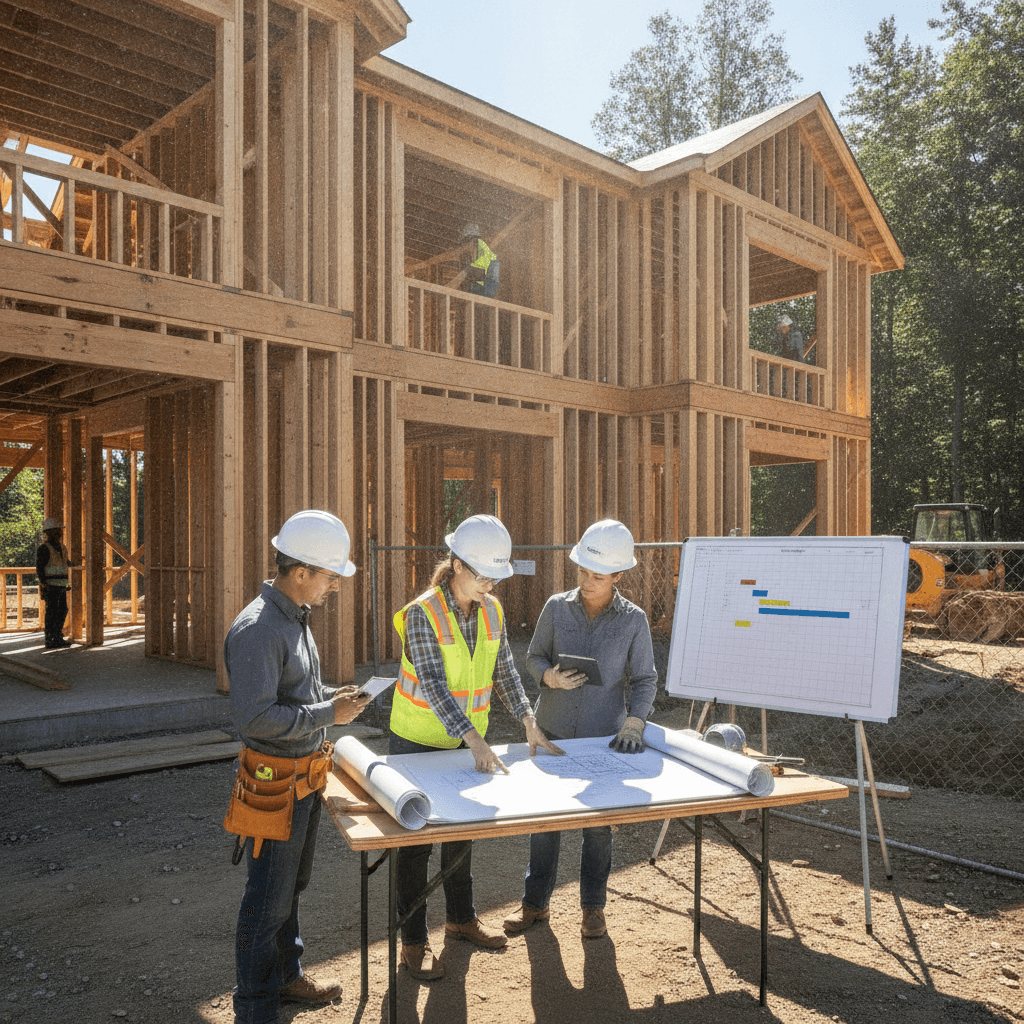
Here’s a real-world snapshot from our team. On a steep site, the footing layout would have clashed with the stormwater line. Our PM pulled utility depths during site review, brought engineering forward, and resequenced early earthworks. Framing started cleanly, with no redesign mid‑build—and no nervous wait for “what now?” updates.
- Scope and success: agree on room priorities, natural light goals, and must‑have inclusions that fit your site.
- Program planning: map milestones, dependencies, inspections, and long‑lead orders into a critical path.
- Consultant coordination: channel inputs from designers, engineers, energy assessors, and certifiers into one plan.
- Site operations: coordinate trades, deliveries, access, and safety to reduce downtime and defects.
- Procurement control: lock selections on time, secure freight windows, and line up installation slots.
- Quality assurance: run stage inspections, document issues, and close them before they snowball.
- Clear reporting: share photo‑rich updates with upcoming decisions and their schedule impact.
Want a broader industry perspective on the PM role? See this overview of project manager responsibilities as useful context.
The 8 Stages Your Project Manager Owns — From First Call to Handover
Our eight-stage pathway keeps scope, schedule, and quality aligned: consultation, site review, concept/design, estimate/proposal, approvals, selections, construction updates, and handover. Each stage has a deliverable, a decision gate, and a quality checkpoint your PM leads.
This structure applies across custom homes, duplex or multi‑dwelling builds, renovations and extensions, and secondary dwellings. What makes it different is the “non‑obvious” work your PM handles behind the scenes.
| Stage | What your PM delivers (the non‑obvious move) |
|---|---|
| 1) Consultation | Agree success metrics (light, storage, circulation) and set a fixed update cadence so silence never creeps in. |
| 2) Site Review | Pull underground service depths early so wet‑area locations and slab thickenings aren’t redesigned during permits. |
| 3) Concept & Design | Stress‑test the plan against access, fall, and prevailing winds; align engineering before drawings “look finished.” |
| 4) Estimate & Proposal | Translate inclusions into plain language and highlight any long‑lead items that must be ordered ahead of framing. |
| 5) Approvals | Sequence consultant certificates and respond to conditions while keeping the construction program in sync. |
| 6) Selections | Lock finishes in the right order (tiles before vanity tops, appliances before joinery) to protect installation windows. |
| 7) Construction Updates | Run look‑ahead meetings with trades; surface decisions 1–2 stages early so nothing blocks critical path. |
| 8) Handover | Close punch items, document care/warranty info, and walk you through every switch, valve, and appliance setting. |
Prefer a deep pre‑build primer? Our pre‑construction coordinator guide shows how early coordination prevents redesigns later. For duplex or multi‑dwelling planning, see our knockdown‑and‑rebuild guide on sequencing neighbors, services, and approvals.
Free planning chat: Bring your site and wish list. We’ll outline your pathway, call out long‑lead risks, and share the update cadence we use on every build. Start with our project management and procurement service.
How Project Management Works Differently on Custom Builds vs Volume Builds
Custom builds demand early design‑to‑site integration, curated selections, and proactive resequencing. Volume builds rely on standardized plans and allowances. The PM’s emphasis shifts from repeating a template to orchestrating a one‑off that fits the site and your lifestyle.
Where a custom‑home PM adds outsized value
- Design integration: position glazing, eaves, and services to suit the site before engineering is locked.
- Decision timing: lock appliances and plumbing fixtures early so joinery and rough‑ins align perfectly.
- Risk control: make supply and weather risks visible early; pre‑book alternatives where sensible.
- Bespoke QA: inspect unique details (feature stairs, skylights, wall niches) with tailored checklists.
For a neutral overview of core PM competencies, this project manager skills explainer outlines the baseline you should expect from any delivery team.
Overseas Procurement and Supplier Coordination: The Hidden PM Role
Signature finishes often travel far. Your PM vets suppliers, manages samples, forecasts lead times, books freight, times deliveries to installation windows, arranges storage and handling, lines up alternates, and captures manuals and warranties for handover.
This matters on custom projects. Our project management and overseas procurement service keeps specialty items—like porcelain slabs or premium fixtures—flowing into the schedule, not blocking it.
- Due diligence: verify specifications, samples, and compliance documentation before ordering.
- Freight & timing: coordinate shipping and delivery to land just ahead of installation (not months early).
- On‑site handling: stage materials to reduce damage and double‑handling; brief trades on installation details.
- Plan B: maintain approved alternates if supply shifts so the schedule doesn’t stall.
- Documentation: file care guides and warranties for a smooth handover.
For a general industry explainer on construction PM methods, see this concise construction project management guide.

What to Ask Before You Hire a Builder About Their Project Management
Ask who your day‑to‑day PM is, how often you’ll get updates, and to see a sample schedule/report. Clarify how permits, consultants, and long‑lead items are coordinated—and which quality checkpoints the PM owns before handover.
- Who is my PM and what’s the update cadence? Weekly during active site works is common—confirm the channel and format.
- Can I review a sample schedule and report? Look for milestones, dependencies, photos, and next‑step decisions.
- How are consultants and permits integrated? Expect one program, not separate threads.
- What happens if a long‑lead item slips? Ask about substitutions and resequencing.
- Which stage inspections do you run? Request the checklist and closure process before handover.
If you want to see how we regionalize planning, browse our localized PM playbooks (examples include PM playbook and delivery approach)—the process is consistent, the site specifics vary.
Frequently Asked Questions
Most owners ask about update cadence, decision timing, and how we handle long‑lead items. The short version: predictable reporting, early selections, and tight logistics prevent rework and delays.
What does a residential construction project manager do?
They plan and control your build from consultation to handover—defining success with you, coordinating design and permits, managing procurement and trades, enforcing schedule and quality, and reporting progress with clear next steps.
How often will I get updates during construction?
Expect scheduled updates—often weekly during active site works. Strong reports include photos, milestone status, critical‑path decisions, and what’s needed from you to keep things moving.
What’s different about PM on custom homes?
Custom homes require early design‑to‑site integration, curated selections for long‑lead items, tailored inspections, and proactive resequencing when conditions change. That delivers a better fit and finish for how you live.
Do you coordinate overseas procurement and logistics?
Yes. We vet suppliers, manage samples and specs, forecast lead times, book freight, time deliveries to installation windows, line up alternates, and capture manuals and warranties for handover.
Key takeaways
- A capable residential construction project manager provides single‑point accountability and calm, predictable communication.
- Our eight‑stage pathway prevents silent delays and protects finish quality.
- Custom builds benefit from earlier design integration and long‑lead planning.
- Overseas procurement adds value when the same PM owns sourcing through installation.