

6 August 2026
7 approvals coordination checklist essentials for Western and Northwest Sydney builds
A seven-item approvals coordination checklist for Western and Northwest Sydney builds with documents, contacts, council tips, WHS checks and next steps.
7 approvals coordination checklist essentials for Western and Northwest Sydney builds
How to use this checklist and what it covers
This article is a seven-item, numbered approvals coordination checklist designed for homeowners, landowners and small developers planning a custom home, knockdown and rebuild, duplex or granny flat across Western and Northwest Sydney. Read the checklist in order to understand task sequencing, then use the printable one-page checklist during meetings with your builder, certifier or council.
If you are preparing to hand your brief to a builder, King Style Homes includes approvals coordination and site-aware planning as part of its client pathway, from consultation and site review through to approvals and handover. For a builder-side view of pre-construction coordination see the pre construction coordinator guide.
Each numbered item below explains who typically does the work, the documents you need, common pitfalls and practical local tips for suburbs such as Marsden Park, Box Hill and Kellyville.
1. Pre-lodgement site review and constraints check
Why do this first: identifying zoning, easements, utility alignments, flood or bushfire overlays and neighbouring party wall risks before lodgement prevents rework and costly design changes after the DA or CDC is submitted. A site review should also flag slope, retaining and access constraints that affect foundations and driveway design.
Who does it
Your architect or a builder-led pre-construction team conducts the site review. Builders experienced in Western and Northwest Sydney, including King Style Homes, combine a visual inspection with searches of council planning maps and title documents.
Action checklist
- Obtain a current title and plan of subdivision and check for easements, covenants and utility alignments.
- Confirm local zoning and overlays using the relevant council planning portal.
- Inspect site access, slope, trees and neighbouring structures in person and record photographic evidence.
- Record immediate risks that will affect cost: retaining, rock, service relocations and required set-backs.
2. Compile essential documentation before lodgement

Councils expect a consistent set of documents at lodgement. Preparing them in full reduces requests for additional information and speeds assessment.
Key documents to prepare
- Architectural plans and elevations, drawn to council scale with clear notation.
- Site survey showing contours, levels, existing structures and nearby services.
- Soil and geotechnical reports where recommended by an engineer.
- Structural engineer drawings for footings, retaining and any engineered elements.
- Energy and sustainability statements such as BASIX where required.
- A clear schedule of finishes and a selections list to limit later variations.
Local lodgement assistance pages explain specific document formats and submission expectations. For an example of lodgement guidance see Brisbane City Council's lodgement assistance resource for document checklists and common reasons for requests for further information.
3. Engage certifiers, engineers and specialist consultants early
Engaging the right consultants before lodgement prevents DA or CDC conditions that can extend approvals and increase cost. Early decisions include whether to use a private certifier or rely on council certification, and which specialist reports are required for your site.
Who does it and when
Your architect or builder usually coordinates appointments with structural, civil and geotechnical engineers. For projects near busy roads, with mature trees or potential acoustic issues, engage traffic, arborist or acoustic consultants at this stage.
Practical criteria
- Private certifier versus council: a private certifier commonly speeds construction certification once plans are approved, but discuss the pros and cons with your project team early.
- Ask consultants for a scoped brief that ties their deliverables to the DA/CDC documentation to avoid repeat fees.
- Budget for specialist reports in your estimate and proposal so they are not an unexpected cost later.
4. Complete WHS consultation and coordination for the build
Work health and safety duties require consultation and coordination between duty holders during planning and on site. Demonstrating effective consultation is often necessary for approvals and is essential before contractors begin physical works.
Practical steps
- Identify duty holders (PCBU: person conducting a business or undertaking), including the builder and principal contractor.
- Record consultation arrangements, worker representation and how decisions will be communicated on site.
- Include a safety management plan and a site-specific induction procedure within construction documentation.
Use an authoritative checklist when documenting consultation. Safe Work Australia provides a practical consultation checklist you can adapt for pre-construction planning and to demonstrate cooperation between parties.
5. Council lodgement: choose the right pathway (DA, CDC or both) and prepare for conditions
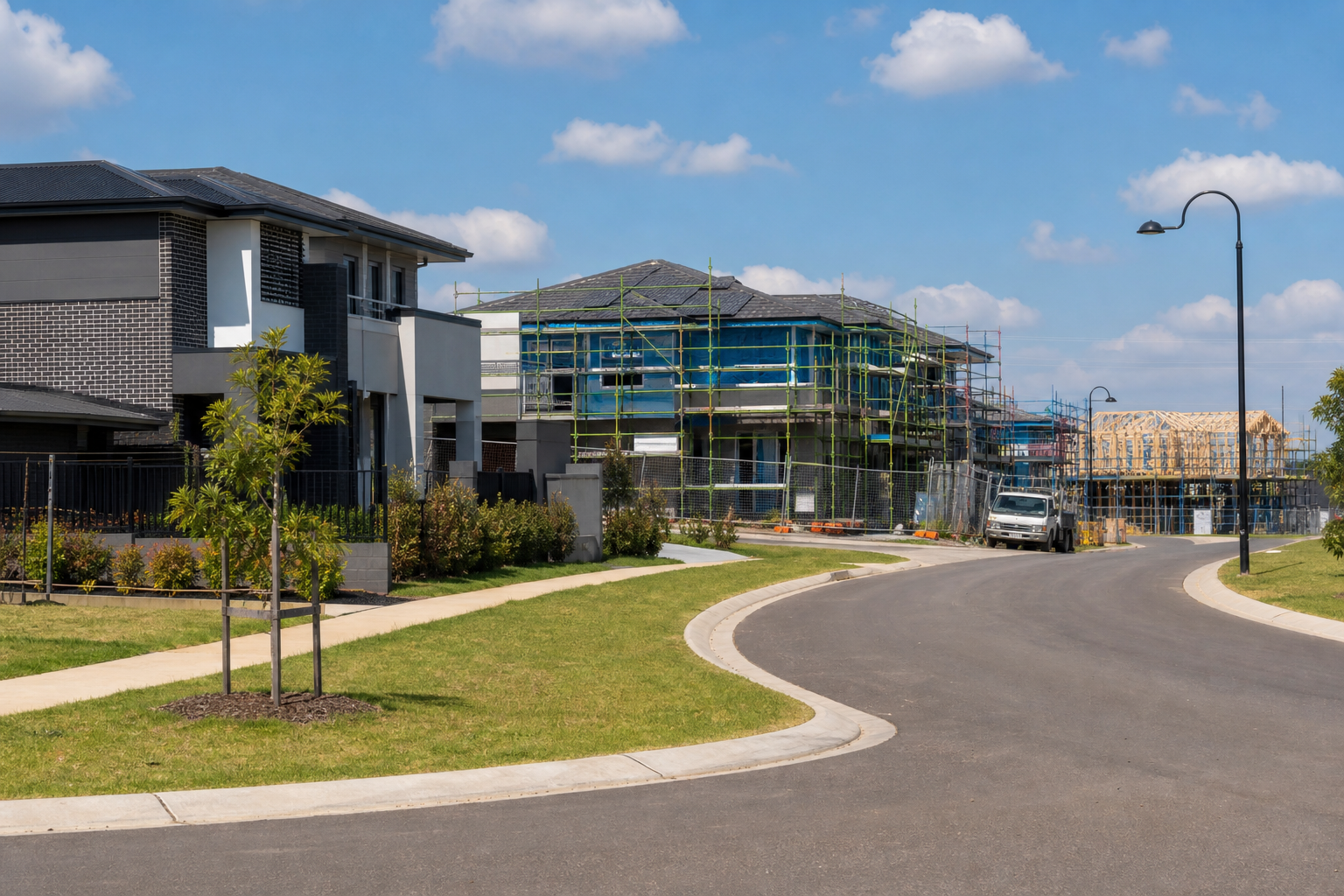
Selecting Development Application (DA) versus Complying Development Certificate (CDC) depends on site zoning and the scale of works. CDCs can be faster where the project fully complies with development standards; DAs are necessary where discretion or planning variation is required. Some projects need both a DA and a separate construction certificate.
How to choose
- If the design meets local development standards and state codes, a CDC may be appropriate.
- If any variation or discretionary assessment is expected, prepare a DA with supporting statements and specialist reports.
- Check your local council portal for lodgement checklists and the exact list of documents required prior to submission.
Local councils publish lodgement assistance that lists the items they review at submission and the common reasons for requests for more information. In growth-area suburbs of Western and Northwest Sydney, provide clear driveway and infrastructure tie-in plans to reduce requests for amended plans during assessment.
6. Coordinate multi-agency approvals and use facilitation pathways for complex projects
When a proposal triggers state or Commonwealth agency referrals, a coordinated approvals pathway or lead-agency facilitation may speed outcomes. Complex or multi-dwelling developments sometimes need ministerial or inter-agency coordination; in those cases a project lead bundles documentation, lodgement forms and follow-up requests to centralise communication.
When to consider facilitation
- Large duplex or multi-dwelling projects, or works affecting state assets or environmental overlays.
- When multiple state agencies must review the proposal and a single point of contact would reduce duplication.
- Where timing certainty is critical and a facilitation pathway exists, request a lead-agency or ministerial coordination process.
State guidance on approvals facilitation and lead-agency coordination explains when coordinated pathways apply and how a lead agency manages referrals. See the Western Australian approvals facilitation pathways and Queensland's ministerial approval coordination example (ministerial coordination arrangement) for reference models.
7. Handover compliance and certificate close-out
Final compliance is the last approvals stage and is critical before occupying a completed structure. The close-out bundle typically includes final inspections, an occupation certificate or final certification, as-built drawings, warranties and a defects list with an agreed rectification timeframe.
Handover action list
- Ensure all certifier inspection reports are lodged and any outstanding conditions are resolved.
- Collect as-built drawings, service diagrams and manufacturers' warranties in a single handover pack.
- Record agreed defect rectification procedures and the practical completion date for warranty periods.
- Maintain statutory files for future sale, refinancing or council audit requests.
Builders frequently coordinate certifier inspections and lodgement of final forms to minimise delays to occupation. King Style Homes offers turnkey delivery and manages procurement, logistics and approvals close-out as part of its project management services to prepare a home for move-in.
Frequently asked questions
How long do approvals usually take for a knockdown and rebuild in Western Sydney
Approval timelines vary by council, site complexity and whether the project follows a DA or CDC pathway. Councils publish lodgement and assessment guidelines that illustrate expected steps. Your builder or project manager can provide a schedule estimate once the documentation and consultant reports are complete.
What does approvals coordination include and who pays for specialist reports
Approvals coordination typically includes preparing and checking lodgement bundles, engaging consultants, managing certifier inspections and following up with council or agencies. Specialist reports — geotechnical, arborist, acoustic and traffic — are normally paid by the client and scoped into the estimate or proposal so costs are visible before lodgement.
Do I need a private certifier or will council handle certification for my project
Either option can be used. A private certifier often provides a faster pathway to construction certification once plans are approved, while council certification remains an option for some projects. Discuss the pros and cons with your builder and the chosen certifier early so the certification approach is reflected in the project program.
Can a builder lodge a DA or CDC on my behalf and what documents do they need from me
Yes. Builders commonly lodge DAs or CDCs on behalf of clients when engaged for design-and-construct projects. Typical documents requested from the client include proof of land ownership, ID for the applicant, a signed builder-client agreement, the selections schedule and any permitted planning concessions. Your builder will confirm the exact list during pre-lodgement planning.
How can I reduce the risk of approval delays and hidden scope changes during construction
Prepare a full documentation pack before lodging, engage certifiers and engineers early and agree a defined schedule of finishes to reduce variations. Use a builder or project manager who provides clear milestone reporting and approvals coordination so invoices and contractor instructions follow documented approvals and signed change orders.
For a printable checklist and a deeper look at pre-construction coordination on the builder side, see the pre construction coordinator guide.
Next step: to arrange a site review or discuss approvals coordination for your project, contact King Style Homes.