

11 August 2026
Questions to ask before choosing overseas procurement for homes
Practical questions and red flags to ask when a builder proposes overseas procurement for homes, with NSW-specific approvals, contract and insurance checks.
Questions to ask before choosing overseas procurement for homes
If your builder proposes importing modules or components, you need a tight set of questions and contractual protections before you commit. This article gives a practical checklist of what to ask, the common mistakes that add cost or delay, the NSW approvals to insist on, and the contract and insurance points you should never skip.
Why builders propose overseas procurement and when it can be appropriate
Builders often suggest overseas procurement because of access to specialist systems, factory capacity for modular panels, or the prospect of lower manufacturing costs. Imported systems can be sensible when a product is genuinely unique or unavailable locally, and when the supplier offers documented compliance plans and enforceable warranties. However you should not accept cost or time claims without documentary proof and legal review, and you must verify the supplier and product yourself.
Authoritative advice on supplier selection reminds buyers to research suppliers and to think carefully about whether an overseas supplier is appropriate before signing contracts. For a checklist and guidance on supplier checks, see the supplier guidance from Business Queensland. Practical checks for imported or modular systems are also highlighted in industry commentary warning that overseas designs may be made for different climates and codes, so local technical review is vital (Somners).
The essential questions to ask every builder or supplier
Supplier and manufacturing capability
- Who exactly is the manufacturer and where is the factory located? Request the factory address, a recent production calendar and names of other Australian projects completed.
- Can I inspect the factory or see independent factory audit reports, and will the supplier allow third party inspection during manufacture?
- Provide references for three recent Australian clients and permission to inspect their finished homes where possible.
Ask for documentary evidence rather than verbal assurances. YourHome recommends speaking with previous clients and inspecting completed homes when comparing quotes or suppliers (YourHome).
Technical compliance and certification
- Do factory drawings, test reports and certificates exist that demonstrate compliance with the National Construction Code and relevant Australian Standards? Please show them.
- If the product was designed for another country, what work will adapt it to NSW wind, thermal and fire requirements, and who signs off on that adaptation?
- Are electrical and plumbing systems factory-fitted to Australian standards, or will local trades complete the connections on site?
Imported modular systems often require a local technical review to confirm compatibility with Australian construction practice and approvals, so insist on documented test evidence and a plan for local certification (Somners).
Logistics, transit insurance and risk
- Who arranges manufacturing insurance, marine transit insurance and inland carriage insurance? Ask for the insurer name, policy number and Australian claims contact.
- When does title and risk pass from the manufacturer to the buyer? Is that tied to shipment, customs release or delivery to site?
- Who pays customs duties, quarantine charges and inland delivery fees?
Contracts, payments and security
- What specific milestones trigger each progress payment and do those milestones require independent verification or inspection reports?
- Are there retention amounts, performance bonds or bank guarantees available to protect advance payments?
- Which law governs the supplier contract and where will disputes be resolved?
Warranty, defects and aftercare
- Who gives the warranty and is it transferable and enforceable in NSW? Ask for the written warranty and claims process.
- If a component is defective after installation, who pays for removal, return or replacement and who meets the installation costs?
Lender, valuation and ownership during manufacture
- Will your lender accept the procurement model and how will the finished home be valued if major elements were imported? Ask the builder to outline any lender questions they have previously encountered.
- How is ownership documented while the product is in manufacture or in transit so lenders and valuers can confirm security? Provide the chain of custody paperwork.
When a builder proposes imported components, you can ask them to walk you through the answers to these exact questions. If you prefer a coordinated delivery and compliance plan, consider engaging a project manager who offers specialised project management and overseas procurement services to manage supplier logistics and approvals.
NSW approvals and technical checks you must insist on
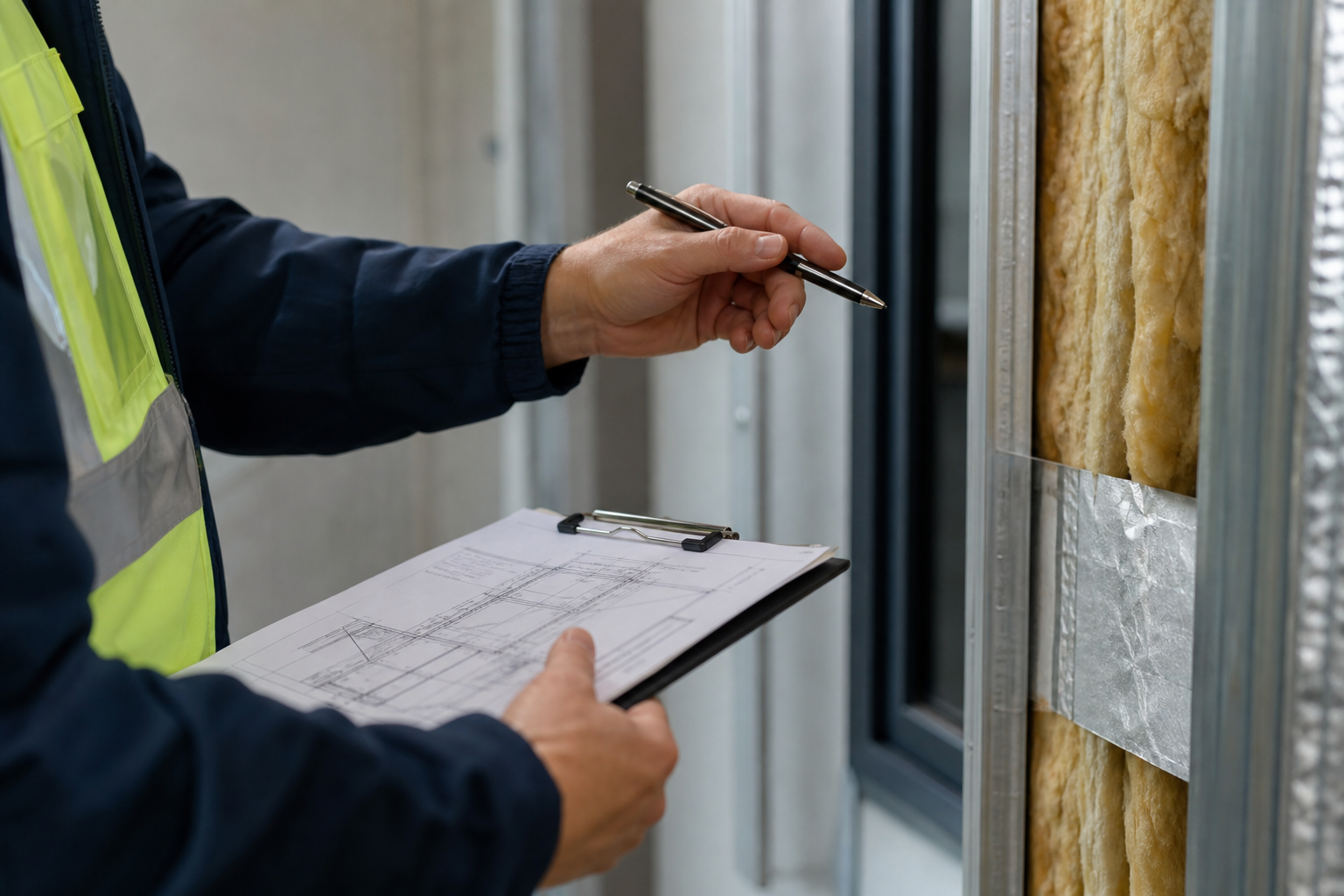
Certifier and engineer sign-off before manufacture
Insist on a local structural engineer and your nominated certifier reviewing and approving factory drawings before manufacture begins. Early certifier engagement reduces the chance of nonconforming items arriving and needing rework on site.
National Construction Code and Australian Standards evidence
Require documentary proof that the component design meets the National Construction Code or has an approved equivalence path. Ask the builder to show the certificates, test reports and the engineer letters that will be supplied with the final submission to the certifier.
Electrical and plumbing compatibility
Imported electrical distribution, switchgear and plumbing termination details must match Australian practice. Request locality-specific wiring diagrams and plumbing stub locations so local trades do not have to redesign interfaces once the component arrives.
Energy performance and fire safety
Confirm thermal performance data and any fire resistance level or bushfire compliance documentation required for Western and Northwest Sydney sites. Where relevant, ask how the module or component will meet local smoke control and fire separation requirements.
Site-specific geotechnical and footing checks
Imported modules still sit on local soil. Require geotechnical inputs and a footing adaptation plan from the structural engineer so the factory-produced base or connection details match the site conditions.
Industry guidance on imported systems highlights that overseas designs are often made for another climate or code and that a local technical review before ordering is prudent to avoid costly issues on arrival (Somners).
Contract clauses, payment structures and insurance terms to negotiate
Progress payments tied to verifiable milestones
Insist that progress payments link to verifiable manufacturing milestones and independent inspection certificates. Avoid open-ended deposits without a clear inspection and milestone schedule.
Title transfer and risk allocation
Define precisely when title and risk transfer, for example at factory gate, on shipment, on customs release or on delivery to site. That definition determines who bears loss and who files insurance claims if parts are damaged.
Transit and manufacturing insurance
Require named insurance policies that cover manufacturing defects, marine transit loss and inland transit. Ask for an Australian claims contact and ensure the policy does not exclude defects that only appear after installation.
Performance security and remedies
Negotiate retention monies, bank guarantees or performance bonds that you can draw on if the supplier fails to deliver or supplies defective components. Include a clear dispute resolution clause and specify that NSW law governs the contract where practicable.
Business guidance on supplier contracts stresses legal review before you sign and recommends documenting who is responsible for each cost and risk. For practical supplier selection checklists see Business Queensland and for cross border purchase considerations see the checklist approach in an overseas property resource (MyOverseasProperty).
Common red flags and mistakes that cost time or money

No verifiable factory references or refusal of audits
Next question: ask for client names and the right to inspect a completed home or factory. Decision rule: pause procurement if the supplier refuses third party inspection or references.
Vague technical specifications or missing test certificates
Next question: request the full set of test reports and the local engineer sign-off. Decision rule: do not pay a deposit until local compliance evidence is produced.
Progress payments without independent inspection milestones
Next question: who performs the inspections and what evidence will be provided? Decision rule: require independent inspection reports before each staged payment.
No local installer nominated or indeterminate handover plan
Next question: who will complete local connections and how will the interface handover be managed? Decision rule: stop if the builder cannot name or contract a qualified local installer.
Insurance that excludes manufacturing defects or transit loss
Next question: ask for policy wording and the Australian claims contact. Decision rule: insist on full coverage or withhold payment until cover is confirmed.
These mistakes are often avoidable by insisting on documentary evidence and independent review up front. Industry advice warns that overseas systems can be incompatible with local codes and that lenders and valuers will ask pointed questions about the procurement route, insurance and ownership during manufacture (Somners).
How overseas procurement changes project management and what to expect
Longer lead times and staged coordination
Manufacture, marine transit, customs clearance and inland delivery add weeks or months to staging. Plan for fixed delivery windows and allow float for customs or quarantine delays.
Inspection and quality control during manufacture
Schedule pre-shipment inspections, hold points for sign-off and an on-arrival inspection before final payments or installation. Independent inspection reports reduce disputes.
Local trades interface and on-site fit-out
Define exactly who completes electrical, plumbing and finishes on site and require as-built drawings and connection points from the manufacturer to avoid rework.
Lenders and valuers need extra documentation
Expect lenders and valuers to ask for the builder identity, evidence on when title passes, progress payment structure, manufacturing insurance and how the finished dwelling will be valued when major elements are imported (Somners).
Decision criteria for choosing overseas procurement
Choose overseas procurement only if the product is demonstrably unique or better value after you factor in compliance, transport and risk, the manufacturer has verifiable references and facility access, and the contract includes clear payment milestones, insurance and performance security. If you prefer coordinated delivery and local approvals handling, a dedicated project management and overseas procurement service can coordinate the supplier, inspections and certifier engagement for Western and Northwest Sydney sites.
What to do next
- Request the manufacturer name, factory address, three recent Australian references and permission to inspect a completed home.
- Ask the builder for all factory drawings, test reports and the name of the local engineer and certifier who will sign off.
- Get legal review of the supplier contract and insist on payment milestones tied to independent inspection evidence.
- Confirm named insurance policies for manufacture and transit and request Australian claims contacts.
- Speak to your lender and valuer early so they understand the procurement model and documentation you will supply.
For homeowners who want coordinated delivery, approvals coordination and on-ground project management, King Style Homes lists a specialist project management and overseas procurement offering that manages supplier logistics, local certification and turnkey installation for Western and Northwest Sydney projects.
Frequently asked questions
Will my lender accept a house built with overseas procured components and what should I tell them?
Lenders vary. Tell your lender who the builder is, how progress payments will be staged, when title transfers, what insurance covers manufacture and transit and how you will prove the finished dwelling’s value. Preparatory documentation reduces the risk of funding delays (Somners).
How can I be sure imported modules or components comply with the National Construction Code and Australian Standards?
Require factory drawings, test reports and a local engineer and certifier to review and sign off the design before manufacture. Do not proceed on verbal assurances alone; ask for the actual certificates and equivalence letters where required.
Who is responsible if an imported component arrives damaged in transit or is defective after installation?
Responsibility depends on your contract. Define when title and risk pass and require transit and manufacturing insurance naming you or the builder as beneficiary. Also include warranty terms that state who pays for removal, return and replacement of defective parts.
What contract protections should I insist on before paying a deposit to an overseas supplier?
Insist on milestone linked payments verified by inspection reports, a bank guarantee or retention, named insurance policies for manufacture and transit with Australian claims contacts and a dispute resolution clause specifying applicable law and jurisdiction.
When is it better to choose a local supplier instead of importing components?
Prefer local supply when the product is readily available, when local code adaptation would be extensive, when you cannot get verifiable factory references or when the contractual protections and insurance are weak. Local suppliers reduce transport risk and simplify approvals and warranty enforcement.
If you want help checking supplier documents, organising independent inspections, or coordinating certifier review and on-site installation, contact King Style Homes for a consultation on project management and overseas procurement. Our team works across Western and Northwest Sydney on approvals, site-aware planning and turnkey delivery. Visit King Style Homes to learn more.